
Outdoor blinds and patio screens for the KwaZulu-Natal North Coast
Outdoor blinds and patio screens, specified and installed by our own team from Zinkwazi Beach to Durban North, in coastal-grade aluminium built for salt air, wind and UV.
Based in Ballito or on the Dolphin Coast? See our outdoor blinds in Ballito page for local consultations and installations.
- Free on-site measure and quote
- Certified Somfy Expert for outdoor motorisation
- Five years on the product, five years on Somfy motors
- Installed by our own team, never couriered for self-installation
Or call 032 815 2973
★★★★★ 4.9 on Google · 63 reviews
Somfy Expert · Soltis · Sunworker · Vantage · Fitted by our own team
What outdoor blinds do, and what they don't
An outdoor screen does four things on a coastal patio: it cuts UV, it drops the temperature, it keeps rain out of a covered space, and it gives you privacy from the neighbours. It does the first three all day, every day. The fourth has a limit worth knowing about before you buy.
An outdoor blind is the most technical product we fit. It spans further than any interior blind, it carries real wind load, and it lives in salt air under a UV index that tops 11. Specified properly it lasts a decade. Specified on price alone it bends, rusts, fades and fights you inside three seasons.
Every screen is built to measure to our specification, and every installation is carried out by our own team from our Ballito showroom. We are a certified Somfy Expert for outdoor motorisation and we quote on the full Soltis, Sunworker and Vantage screen ranges.
Every system we specify in KwaZulu-Natal is built in coastal grade powder-coated aluminium, because salt air is what finishes off hardware that was never meant to live outdoors.
We specify, measure and install outdoor blinds and patio screens along the KwaZulu-Natal North Coast, from Zinkwazi Beach to Durban North, including Ballito, Umhlanga and Umdloti.
UV: protects furniture, fabric and floors
A screen mesh blocks the great majority of UV before it reaches your furniture, cushions, rugs and timber. Under a peak UV index above 11, that is what stops upholstery fading and hardwood bleaching on a sunny patio. It also cuts solar gain through the glass behind it, so the room inside stays cooler and works its air conditioning less.
Heat: shade that still lets air move
Blocking sun is easy. Blocking sun without trapping heat is the part that matters. A screen mesh shades the space and still lets air pass through it, so a patio stays cooler than the same patio enclosed in solid plastic. On a February afternoon at 26.5°C that difference is the whole point.
Rain: a covered patio you can use in the wet season
December brings rain on roughly seventeen days of the month. Dropped screens turn a covered patio from somewhere you abandon in the wet season into a room that still works, which on this coast covers most of the summer holidays.
Privacy: excellent by day, not after dark
Screen mesh works in one direction. In daylight the brighter side is outside, so you can see out and passers-by cannot see in. After dark that reverses: with the lights on inside, you become the brighter side and the screen no longer hides you.
Nobody selling outdoor blinds mentions this, and it is the most common disappointment we hear about. If evening privacy matters, the answer is a denser fabric or a blackout fabric, and we will tell you that at the quote rather than after installation.
Two ways to build an outdoor blind
There are only two. Every quote you receive, from anyone, is one of them. Cassettes, side cables, guides and reinforced bars are add-ons, not separate systems, and knowing the difference is what lets you compare two quotes properly.
1. Free-hanging outdoor blinds, up to 6m wide
The fabric rolls down from a top tube and is tensioned at the bottom with a bungee bracket. Manual or automated, your choice. If you automate it, you unhook the bungees before running it up.
Well specified, this handles most patios on this coast for a fraction of the cost of a locked-in system. What it cannot do is pull itself back in when the wind comes up, because the bungees hold it down. It stays where you left it.
Best for: courtyards, covered braai areas, and patios with walls on two sides. Sun, heat and rain rather than exposure.
What you can add to a free-hanging blind
Cassette: a housing that encloses the tube and brackets so nothing is exposed and the rolled fabric sits tight inside. This is about finish, and on a clean modern facade it makes a visible difference. Manual or automated, like the screen itself.
Side cables or U-track guides: these guide the fabric down each edge and change how the blind behaves, not just how it looks. A free-hanging screen is essentially up or down. On cables you can stop it anywhere, halfway or three-quarters down, to cut early morning or late afternoon sun without closing the space in. It also sits neater with less side movement.
Plumb fillers and plumb angles: for openings that are not square, which on a coastal build is most of them.
Reinforced bottom bar: standard on anything wider than 3m, because a longer bar needs more rigidity to pull evenly.
One thing to be clear about: a cabled screen still hooks down with a bungee. Cables and cassettes give you more positions and a better finish. They do not give you more wind protection.
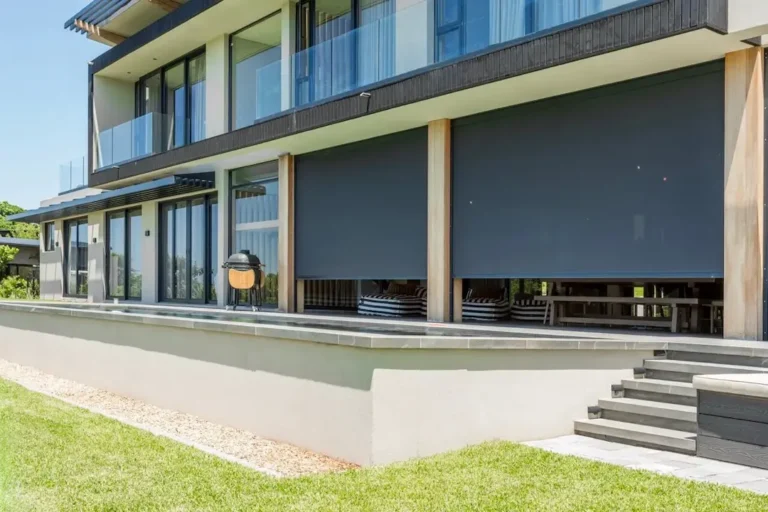
2. Fully locked-in zip screens, up to 7m wide
A welded zip runs down both fabric edges and locks into inner guide rails, so the screen is held taut across its full height with no gaps at the sides and nothing to clip down. The mechanism and fabric sit inside a full cassette housing, which is both why it reads as part of the building and why it lasts.
Supplied automated as standard, with a Somfy Eolis wind sensor. That sensor is the reason this system costs what it does: it retracts the screen before a gust reaches its limit, whether or not you are home. It only works on a screen that can retract itself, which is why you cannot get the same protection by adding a sensor to a free-hanging blind.
A 6m locked-in screen runs on a single motor.
Best for: exposed and sea-facing patios, and anywhere you want the space genuinely closed in rather than shaded. View automated outdoor blinds.
Reinforced locked-in zip screens, for the largest openings
The heavy-duty version, with a heavier tube and heavier hardware throughout, for openings a standard system will not span.
Its limit is a trade-off between width and drop rather than a single maximum. At 7m wide the maximum height is 4m. At 5m wide you can go up to 6m high. So 7m x 4m, or 5m x 6m, but not 7m x 6m.
Built exclusively in Soltis fabric. At these spans the fabric carries real load and has to hold its shape, and Soltis is the best outdoor screen fabric made anywhere. On every other system we usually steer you towards something more economical. Here that decision is made for you, and it is part of why the price sits where it does.
Send us a photo and we'll tell you what will work
A photo will not get you a price, and anyone who quotes an outdoor screen off one is guessing at your plumb. But it will get you a straight answer on which system suits your patio, which fabric we would specify for your exposure, and roughly what range to budget for.
Send a photo of the opening with a rough width and drop, and we will come back with our recommendation and a ballpark. If it looks like a fit, we book the on-site measure from there.
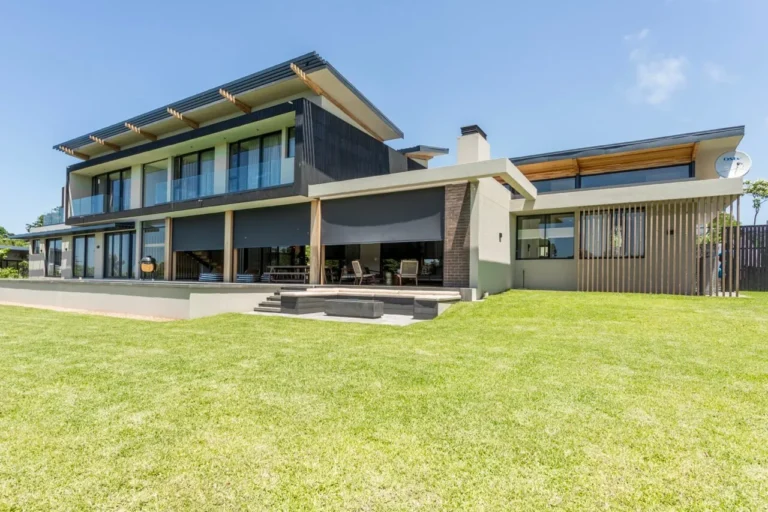
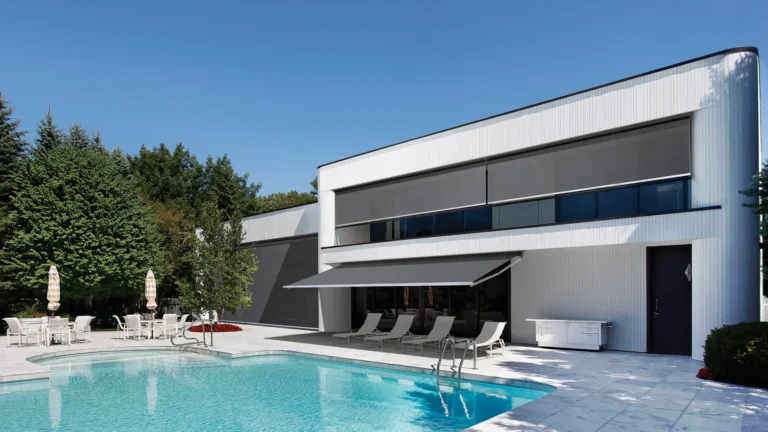
Outdoor blinds we've fitted in KwaZulu-Natal
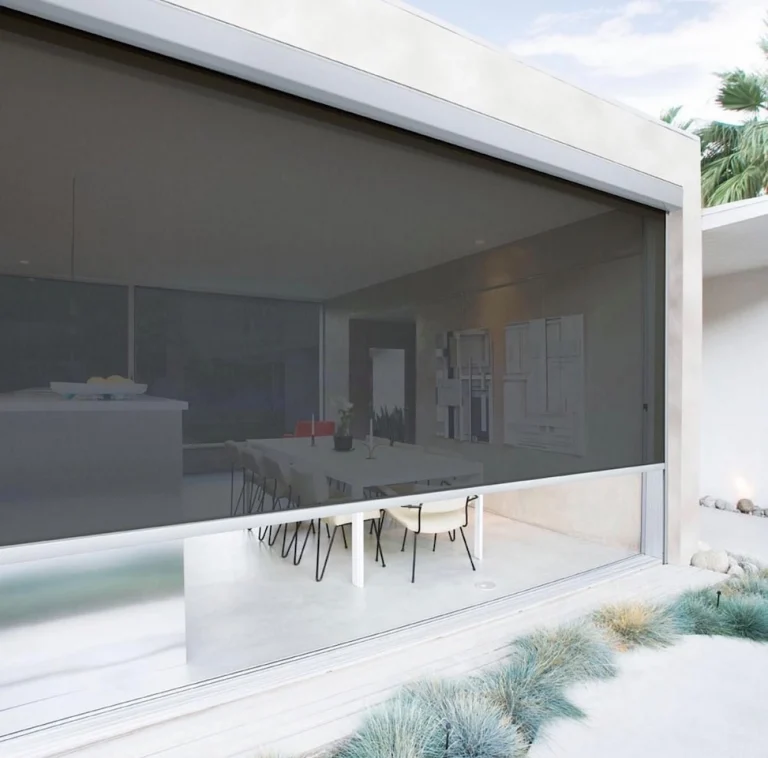
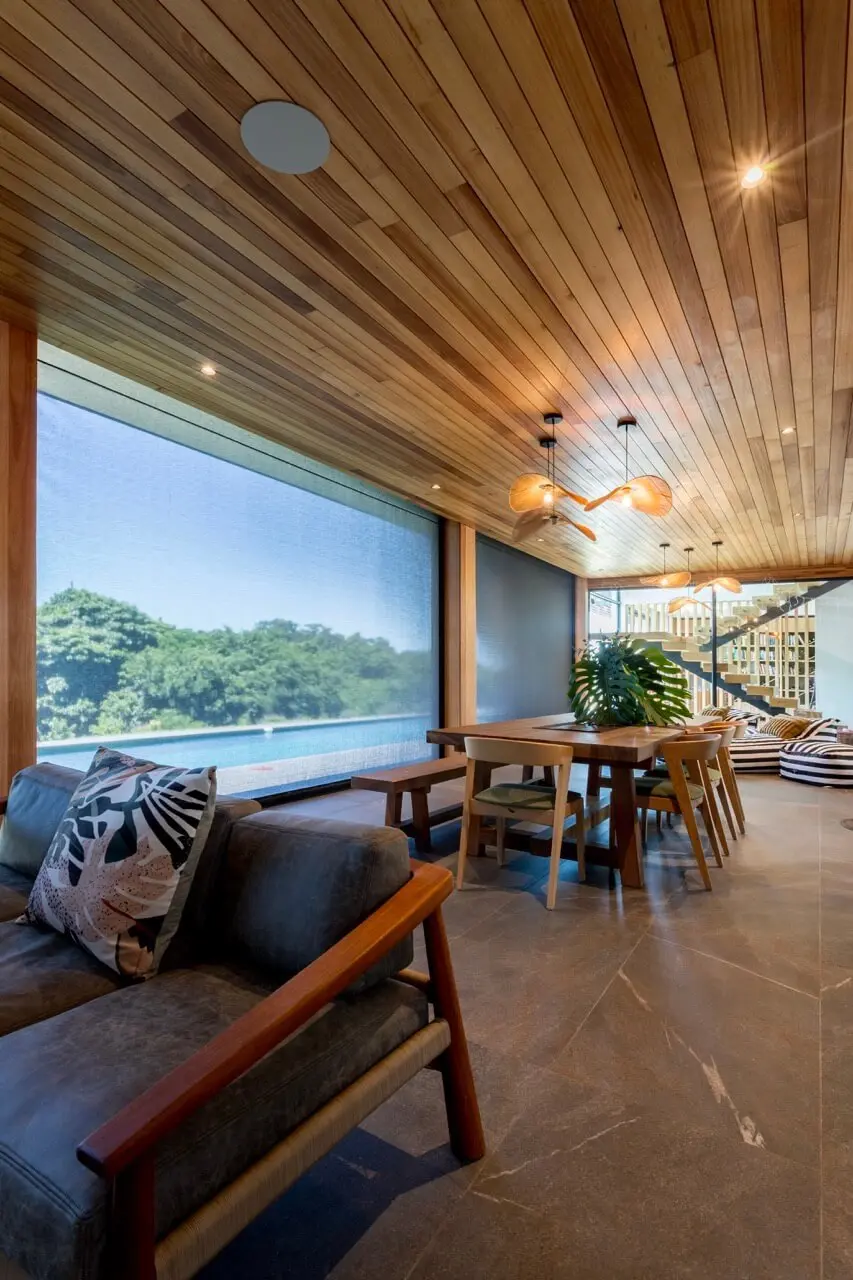
Outdoor blinds · Ballito home
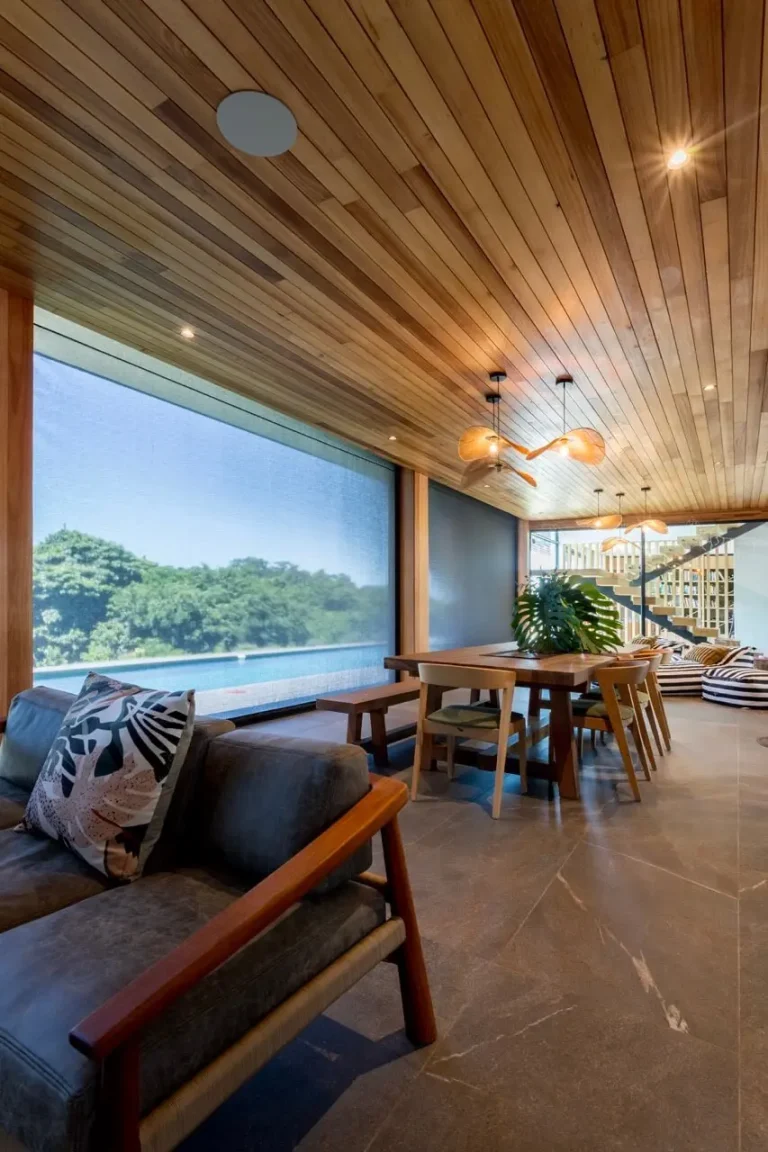
Motorised Somfy outdoor blinds · Salt Rock
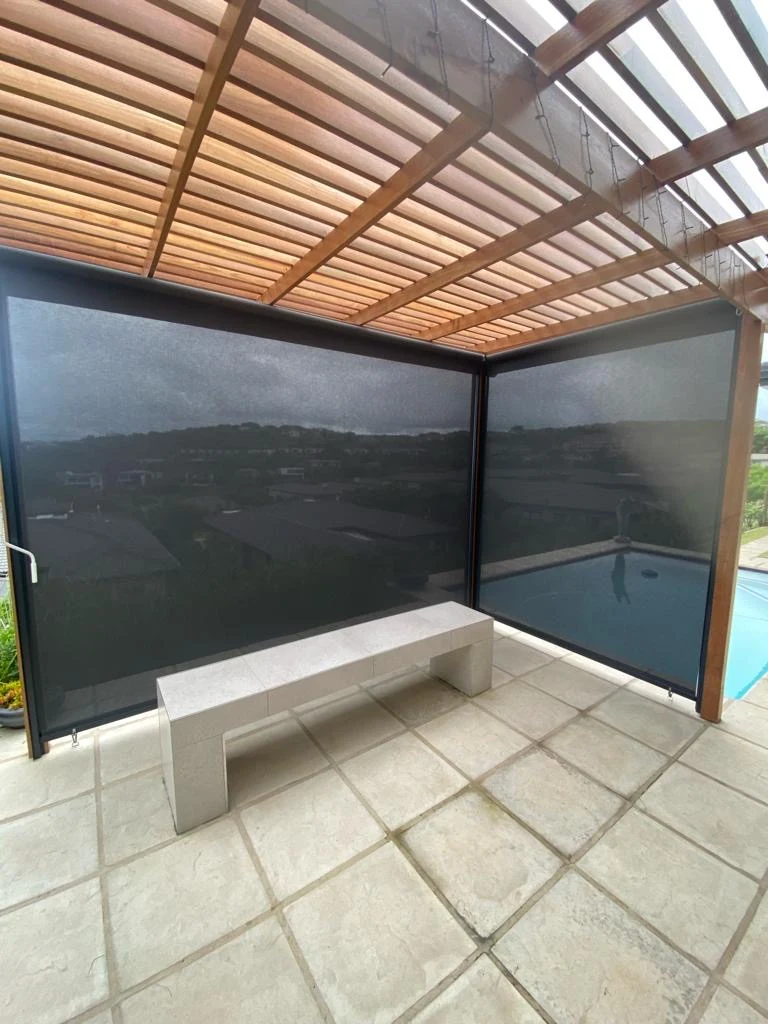
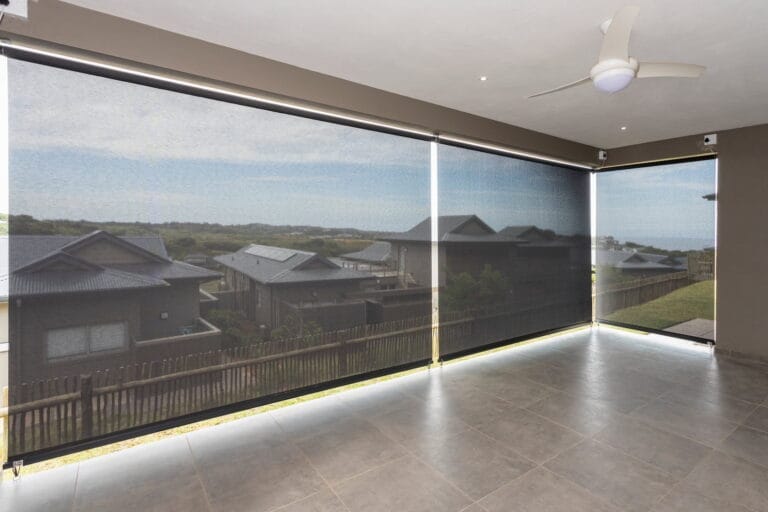
Side-guided cable outdoor blind · covered patio
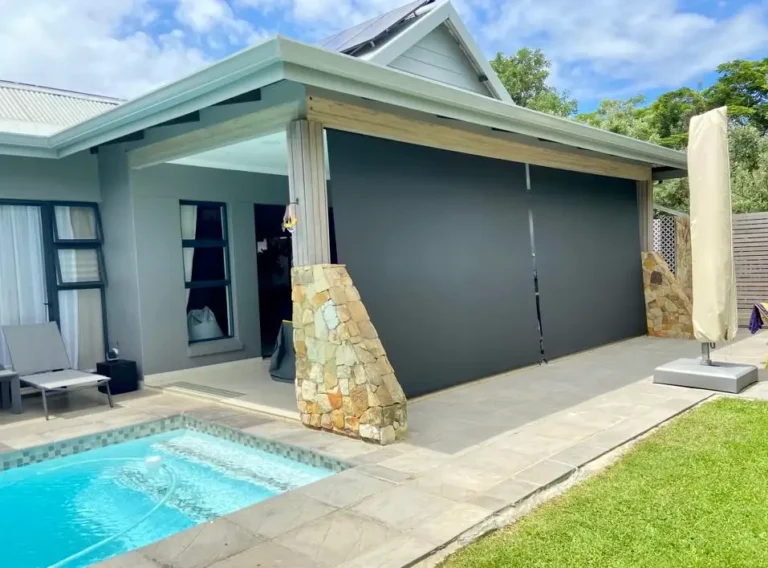
Outdoor screens · Dolphin Coast home
Outdoor blinds · Ballito
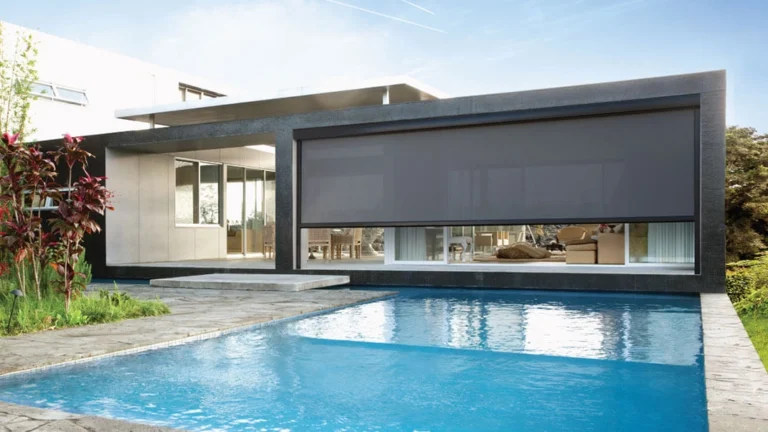
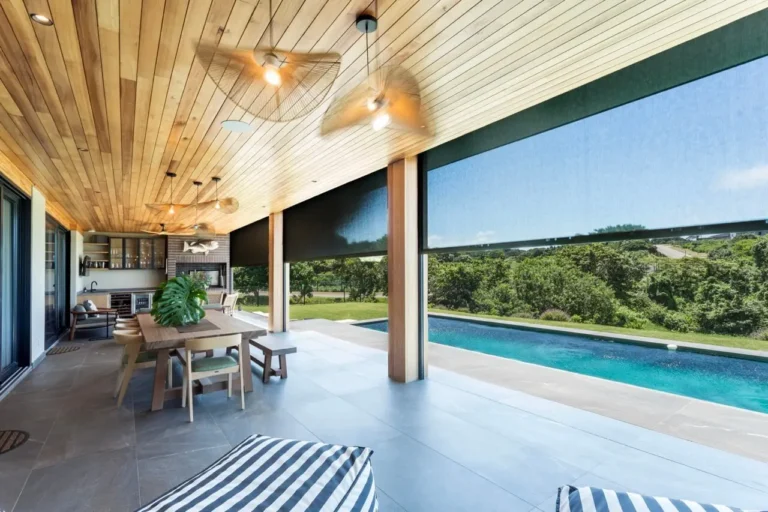
Outdoor blinds · Ballito pool deck
The Window Boutique difference
Led by a qualified interior designer. We don’t simply supply outdoor blinds. We help you choose the right system and fabric, specify every detail correctly for your outdoor space and the coastal environment, then custom-make and professionally install them.
01 | Expert consultation & planning
We assess your outdoor space, sun exposure, wind, weather conditions and how you use the area, then guide you toward the right outdoor blind solution, not just the most popular or cheapest option.
02 | Precise specification & approval
Every detail is carefully specified (fabric, openness, colour, configuration, tracks and manual or motorised operation) so you approve a clear, accurate quotation before anything is made.
03 | Custom made & professionally installed
Your outdoor blinds are manufactured to the approved specification and professionally installed for a precise, weather-resistant finish across Ballito and the Dolphin Coast.
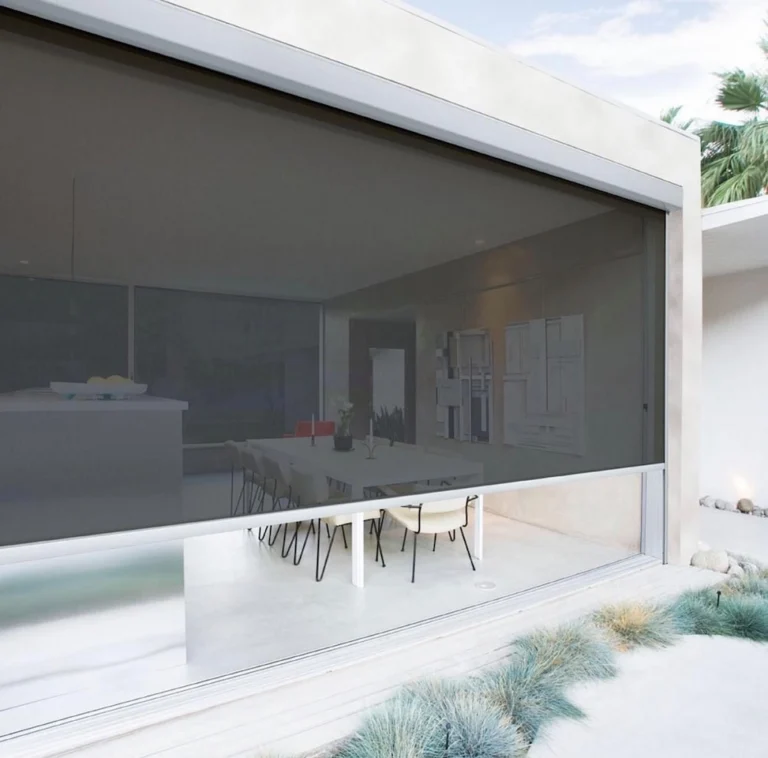
Screen mesh or canvas: choosing your fabric
Two things matter when comparing outdoor fabrics, and colour is neither of them. The openness factor tells you how much of the weave is open, which decides how much air and view you keep. The UV block tells you how much of the sun is stopped before it reaches your furniture. Everything else is preference.
Screen mesh: our usual recommendation. Our default is Vantage Screen 5%. The 5% is the openness factor: five percent of the weave is open, which is dense enough to cut glare and heat hard while still letting air move and keeping an outward view. We quote it more than anything else because it is economical and its technical performance is very close to fabrics costing considerably more. For most homes on this coast it is the best value on the market. Best for: sunny, exposed decks and patios where you want shade without shutting the space in.
Premium screen mesh: Sheerweave, Soltis and Sunworker. Sheerweave is a screen mesh available across a range of openness factors, so it can be specified tight for glare control or more open where you want to keep the view. Soltis is the best outdoor screen fabric made anywhere, and Sunworker sits alongside it. All three hold colour and shape longer under hard UV than budget mesh does. Soltis is also the only fabric our reinforced locked-in screens are built in, because at those spans the fabric carries real load and has to hold its shape. Best for: large openings, sea-facing exposure, and architectural projects where the fabric is part of the design.
Canvas: full shade and full privacy. Where mesh filters, canvas blocks. Hard-wearing and water-resistant, it gives you complete shade, complete privacy day and night, and a clean tailored look in a wide range of colours. The trade-off is honest: you lose the outward view and you lose the airflow that mesh gives you. Choose it where privacy or full shade matters more than seeing out. Best for: boundary-facing patios, west-facing walls taking hard afternoon sun, and anywhere you want the space properly closed.
Automation partners

Book your free consultation
Tell us a little about your patio. We reply within 1 working day, usually the same day.
Explore more window treatments: Blinds | Roller blinds | Bamboo blinds | Shutters | Curtains | Wooden blinds | Wallpaper | Interior design | Automation
Call 032 815 2973
WhatsApp 083 276 4606
Shop 5, 13 Main Rd, Shaka's Rock, Ballito, 4420
Mon to Fri 08:00 to 17:00 · Sat 08:00 to 12:30
No obligation. We use your details to reply to you and to measure our ads. Privacy policy
Questions, answered
What are the best outdoor blinds for windy areas in South Africa?
Fully locked-in zip screens. The fabric edges lock into inner guide rails, so there is nothing to flap and nothing to clip down. More importantly, they are the only system that can retract itself: fitted with a Somfy Eolis wind sensor, the screen pulls up before a gust reaches its limit whether or not you are home. A free-hanging blind is tensioned with a bungee and stays where you left it, so a wind sensor cannot help it.
Are outdoor blinds waterproof and weatherproof?
They are weatherproof against sun, heat and rain, which covers ordinary conditions on this coast comfortably. Average wind on the Dolphin Coast runs between about 11km/h in winter and 16km/h in October, well within what a properly specified screen handles.
What no outdoor blind is, at any price, is a permanent storm enclosure. In October peak gusts reach the high sixties, and a screen large enough to enclose a veranda is a large enough sail to be damaged if it is left down in one. That is what the wind sensor is for. If you need something that stays closed in any weather, you need glazing, not a blind.
Can I use outdoor blinds on my balcony or apartment?
Absolutely. We offer space-saving systems like free-hanging or side-guided screens that work perfectly on balconies, especially in sectional title units and apartments.
Do outdoor blinds block out heat and UV rays?
Yes. Outdoor blinds made with sheerweave or mesh fabrics reduce heat, glare, and UV damage without blocking your view, ideal for patios or sunrooms.
What’s the difference between zip blinds and track-guided systems?
A zip screen has welded zips down both fabric edges that lock into inner guide rails, holding the fabric taut with no gaps at the sides and nothing to hook down. It is automated as standard and it can retract itself.
A cable-guided blind is a free-hanging screen with side cables or U-tracks added. The cables stop side movement and let you park the blind at any height, but the bottom still tensions with a bungee. It is a better finish and more control, not more wind protection.
How much do outdoor blinds cost?
Prices below exclude VAT and are for typical openings. Every screen is made to measure, so your quote will differ.
Free-hanging blinds, manual:
4m x 2.8m: R13,830
5m x 2.8m: R19,740
Fully locked-in zip screens. These are supplied automated with a wind sensor, so the figures below are complete, not screen-only:
4m x 2.6m: R41,640
6m x 2.4m: R64,290
Reinforced, 7m x 3m: R142,050
Each of those includes the Somfy motor, the Eolis wind sensor and a Situo 2 remote. Running several screens needs a motor each, but one Situo 5 remote controls up to five: four individually, with the fifth channel driving them all together, so a three-screen patio does not need three remotes.
Be careful comparing quotes. A locked-in screen quoted without a motor and sensor is not a comparable price, because the system does not work without them.
Lead time is three to four weeks from order confirmation. Lead times can vary by season, with December taking longer, and your quote gives the exact lead time.
Do you install outdoor blinds outside the Dolphin Coast?
Yes, with our own team rather than subcontractors. We cover the North Coast from Zinkwazi Beach to Durban North, including Ballito, Umhlanga and Umdloti, and we travel for larger projects across South Africa. We have installed outdoor blinds in Mauritius, Mozambique and Zimbabwe.
Outdoor blinds are supplied installed. We do not courier them for self-installation, because the guide rails have to go up plumb for the screen to seal.
Can outdoor blinds be motorised?
Yes. Most of our outdoor shades are available with manual or motorised control, including remote or smartphone automation, ideal for luxury homes and commercial use.
Can outdoor blinds cover a 6 metre patio opening?
Yes. For wide openings we recommend a split-span layout: two 3 metre blinds installed side by side rather than one oversized blind. Splitting the span keeps each blind stable in wind, reduces strain on the motors and tracks, and lets you lower one side independently. Both blinds run off a single multi-channel remote or app, so the pair operates as easily as one. We design split-span layouts for patios of 6 metres and wider.
What does 5% openness sunscreen mesh mean?
Openness is the percentage of a sunscreen fabric’s weave that lets light and air pass through. A 5% openness mesh blocks around 95% of UV and glare while preserving your view through the blind, which makes it a favourite for sea-facing patios. Lower openness (1-3%) gives more privacy and weather protection; higher openness (10%) keeps the space brighter. We bring fabric samples to every consultation so you can compare openness levels in your own light.
What warranty and maintenance do outdoor blinds need?
Five years on the product. Five years on Somfy motors. Our installation is guaranteed for 12 months.
We advise booking a service with us once a year. These systems live in salt air under a UV index that tops 11, and December humidity averages 83%. An annual check on the tracks, fixings, fabric tension and motor function is the difference between a screen working in ten years and one giving up in three.
Normal cleaning and maintenance is required to keep your warranties valid. That means rinsing salt off the fabric and hardware, keeping the tracks clear, and not forcing a screen that has stopped running freely. If something is binding, call us rather than pulling harder.
Local consultations and installations.
Retractable, fixed and louvred awnings.
Somfy motors, sensors and app control.
Roller, Venetian, zebra and honeycomb.